Trabzon rewards travellers who like a bucket list experience with a story attached. The city on Turkey’s Black Sea coast combines Byzantine-era monuments, a green mountain hinterland, and a name that has travelled through Greek, Latin, Italian and Spanish. This guide weaves the sites together with the etymology, so you can plan a 2026 trip that is as much about language as landscape.
Why Put Trabzon on Your 2026 List
Trabzon is the capital of Trabzon Province and one of the largest cities on the Black Sea coast of Turkey. According to the 2025 data used in the sources, the urban population stood at 335,116, while the wider metropolitan area was counted at 822,270. The city was founded around 756 BC by Greek colonists, giving walks through its oldest quarters a depth that many bucket list destinations lack.
One practical reason to place Trabzon on a 2026 list is the mild climate. The best time to visit is late spring and summer, specifically May, June, July and August, when temperatures average 18 to 24 °C and precipitation is at its lowest. Winters remain relatively warm, and snow rarely falls in the city itself. That does not mean the region is dry; expect humidity and frequent cloud, especially in autumn.
The Name Is a Table
The first recorded name of the city is the Greek Trapezous, from τράπεζα, which meant “table” in Ancient Greek. The name refers to the table-like central hill between the Zağnos and Kuzgun streams on which the settlement was founded. In Latin the city became Trapezus; Pontic and Modern Greek use Trapezounta.
Western geographers and writers produced many spelling variations during the Middle Ages. The documented forms include Trebizonde in French, Trapezunt in German, Trebisonda in Spanish and Trapesunta in Italian. The Spanish form even acquired a secondary meaning of “hullabaloo” or “imbroglio” because of its similarity to the words trápala and trapaza. For readers who want to follow the word into modern Italian idioms, the Italian-language portal Trebisonda explains its origin and usage.
Hagia Sophia and the Byzantine Layer
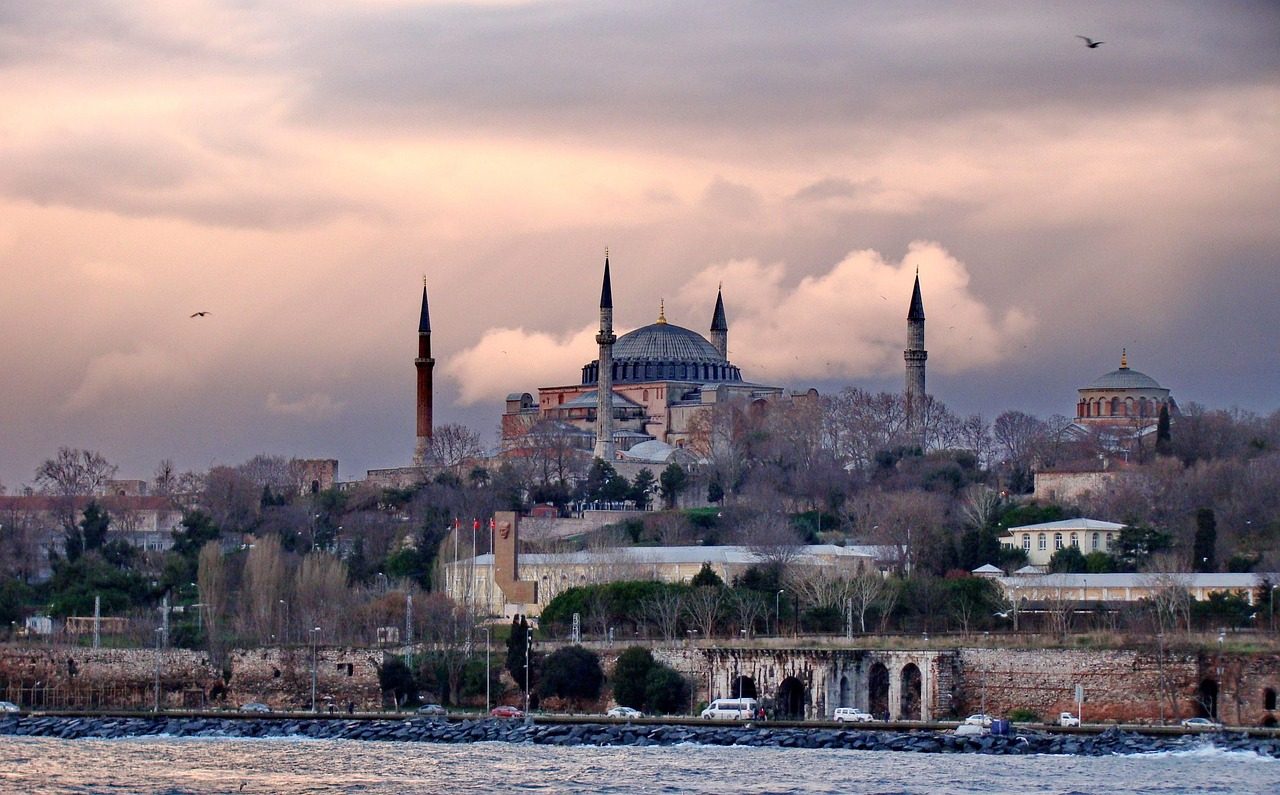
Trabzon’s Hagia Sophia, also known as Ayasofya Camii, began as a Greek Orthodox church from the 13th century. The Ottomans later converted it into a mosque; it then became a museum and is now a mosque once more. When you visit, mosque etiquette applies, so plan your clothing and timing accordingly.
The city’s Byzantine layer extends beyond Hagia Sophia. St Anne’s Church offers a look at Byzantine frescoes, while the Walls of Trabzon date back to Roman times and once divided the settlement into upper, middle and lower towns. Trabzon served as the capital of the Empire of Trebizond from 1204 to 1461, one of the successor states after the Fourth Crusade, before coming under Ottoman rule in 1461.
Sumela, Trabzon Castle and the Green Hinterland
City imagery for the province highlights Sumela Monastery, Trabzon Castle, Uzungöl, Gülbahar Hatun Tomb and Yeni Cuma Mosque as defining landmarks. The monastery sits in the mountain hinterland that makes Trabzon feel so green and lush, a landscape fed by steady rainfall throughout the year.
Outside the city centre, the Düzköy district contains Çal Cave, which appears among outdoor attractions in travel guides. The province as a whole covers 4,628 square kilometres, with a 114-kilometre coastline and districts stretching from the sea into forested highlands. That geography gives you the chance to pair a Byzantine morning in the city with an afternoon in a completely different landscape.
Planning Your Trabzon Visit
For a 2026 trip, aim for late spring or summer if you want the lowest chance of rain and the mildest temperatures. Pack for humidity and the possibility of cloud even in good months. Hagia Sophia is a functioning mosque, so treat it as an active worship space rather than a museum.
Current opening hours and entry rules for individual historical sites were not available at the time of writing. Ask the local tourism office or your accommodation in Trabzon to confirm them. The central district is Ortahisar, and the city centre sits at an average elevation of 33 metres, which can help you orient your stay.